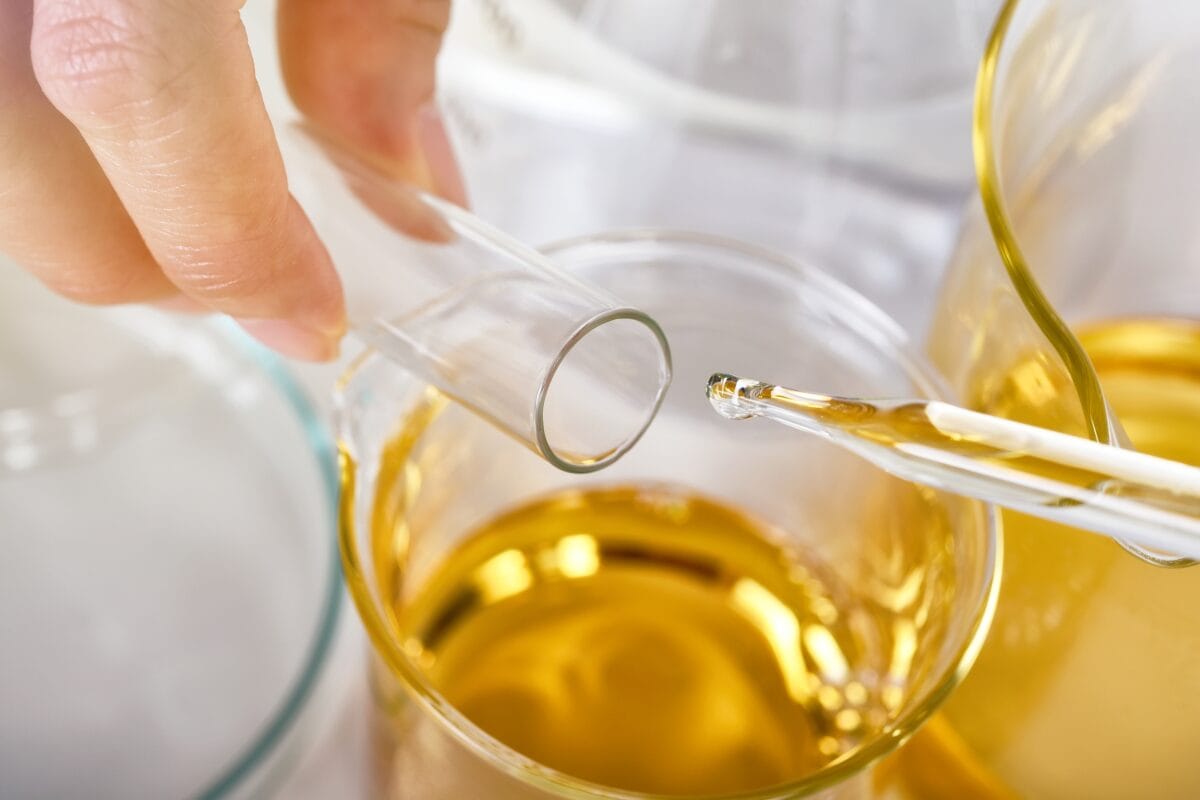
What you need to know about wool fat and lanolin
Anyone who regularly looks at the ingredients list of a care product will probably come across it: wool fat or lanolin. It is a common ingredient in creams, lip balms and ointments. Yet it sometimes raises questions. What exactly is it, why is it used, and what about hypersensitivity?
What is Wool Grease (Lanolin)?
Wool fat, also known as lanolin, comes from sheep. It is a waxy substance extracted from their wool. The production of wool fat is a careful process. First the wool is sheared. The raw wool is then sorted and cleaned to extract the wool grease. This is done by washing the wool in warm water. During that process, the fat is removed from the wool and purified into a soft, greasy substance: lanolin. Lanolin is therefore not an oil or fat that comes from the animal itself, but from the wool fibers. This keeps the sheep's skin supple and protected against cold and moisture. The same property also makes it interesting for use in skin care.
Wool fat consists of a mix of different substances, such as fatty acids and alcohols. This composition makes it very good at providing moisture. That is why it is often used in skin care products. Wool grease wets and protects the skin. It acts as a natural barrier against dryness and irritation. It can also help heal minor wounds and irritations. Due to its natural origin and benefits, wool grease is loved by people looking for natural skin care.
Is lanolin the same as wool grease?
Yes, lanolin and wool grease essentially mean the same thing. “Lanoline” is the more technical name (derived from the Latin lana = wool), while “wolvet” is the Dutch term. Cosmetics almost always use purified lanolin, which is free of impurities and odor.
Wool grease in skin care products
Lanolin has unique properties that make it a popular ingredient in creams and ointments. It forms a protective layer on the skin, without completely closing it. This helps to retain moisture and prevent dehydration. In addition, the structure of lanolin is very similar to that of our own skin fats. This makes it well tolerated and feels natural on the skin. Lanolin is therefore an ingredient that is often used in products aimed at dry, sensitive or damaged skin, such as body lotions, hand creams and foot creams.
A common use of Lanolin / Wool Grease is for eczema. This is a skin condition with dry, itchy and inflamed skin. Wool grease hydrates the skin and restores the barrier. This can reduce the eczema symptoms. Wool fat can also have a supportive effect on psoriasis. Psoriasis causes flaky and inflamed skin. Wool grease soothes the skin and reduces flaking.
Can you be allergic to wool fat?
Although lanolin is well tolerated by most people, it can cause an allergic reaction in a small group. About one percent of the population is sensitive to wool grease. A wool fat allergy is a hypersensitivity reaction to lanolin components. The skin may react with redness, itching or irritation, especially in people with already sensitive or damaged skin (such as eczema). Are you using a product with lanolin and do you notice that your skin becomes itchy or red? Then it can help to stop temporarily and switch to a cream without wool fat. Our advice is to have this further examined by a specialized doctor or dermatologist.
Wool fat is hypoallergenic or not?
At __BRAND_HYPOGEN__ we use wool fat in various care products, including body lotion, leg cream, foot cream and night cream. We consciously choose this because lanolin helps the skin remain supple, retains moisture and supports the natural fat balance, without closing or irritating the skin.
Lanolin is a versatile, natural ingredient that is well tolerated and in its purified form is classified as hypoallergenic ingredients. That is why it fits perfectly within our vision of mild and effective care: formulas that really nourish, protect and support the skin, instead of overloading it. Do you know that you are sensitive or allergic to wool grease? Always check the ingredients list of your care products. You can recognize wool fat by the name Lanolin or Lanolin Alcohol on the INCI list
TrueOr false